

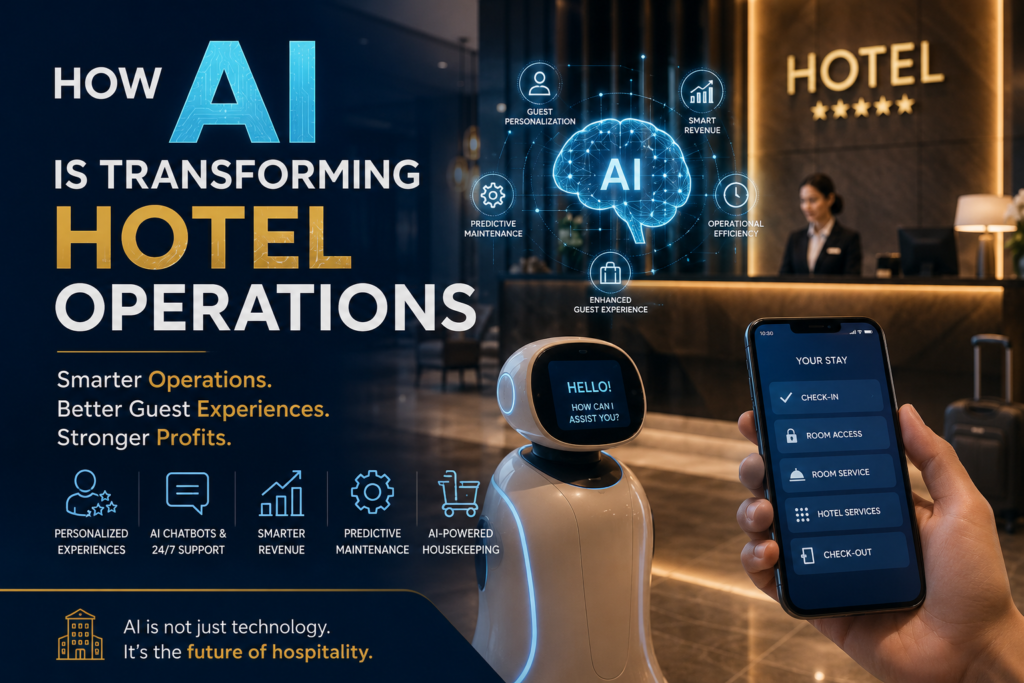

How AI is Transforming Hotel Operations
The hospitality industry is entering a new era — one where Artificial Intelligence (AI) is no longer a futuristic concept, but a practical tool reshaping hotel operations worldwide. From improving guest experiences to streamlining back-end management, AI is helping hotels operate smarter, faster, and more profitably.
In an industry where guest expectations are constantly rising, hotels that embrace AI are gaining a strong competitive advantage.
1. Personalized Guest Experiences
Today’s travelers expect more than just a comfortable room — they want personalized experiences. AI enables hotels to analyze guest preferences, booking history, dining habits, and feedback to deliver tailored services.
Imagine a returning guest checking into a hotel where:
- Their preferred room type is automatically assigned
- Room temperature is preset to their liking
- Favorite dining recommendations are suggested
- Personalized offers are sent before arrival
This level of customization enhances guest satisfaction and increases repeat bookings.
2. AI-Powered Chatbots & Virtual Assistance
Hotels are increasingly using AI chatbots to handle guest inquiries 24/7. Whether it’s room availability, restaurant reservations, check-in support, or local recommendations, AI-powered systems can instantly respond without human delays.
Benefits include:
- Faster customer support
- Reduced front desk workload
- Improved guest convenience
- Higher response efficiency
For hotels, this means better service with lower operational pressure.
3. Smarter Revenue Management
AI is revolutionizing hotel pricing strategies through dynamic revenue management systems. These systems analyze:
- Market demand
- Seasonal trends
- Competitor pricing
- Local events
- Booking pace
Based on real-time data, AI automatically adjusts room rates to maximize occupancy and profitability.
Instead of relying on guesswork, hotels can now make data-driven pricing decisions that directly impact revenue growth.
4. Predictive Maintenance & Operational Efficiency
Unexpected equipment failures can lead to guest complaints and expensive repairs. AI helps hotels monitor systems such as:
- Air conditioning
- Elevators
- Lighting
- Plumbing
- Energy consumption
Through predictive analytics, hotels can identify issues before they become major problems, reducing downtime and maintenance costs.
This not only improves operational efficiency but also enhances the overall guest experience.
5. Enhanced Housekeeping Management
AI-driven systems can optimize housekeeping schedules based on:
- Occupancy levels
- Check-in/check-out timings
- Room status updates
- Guest requests
This allows hotels to:
- Improve room turnaround time
- Reduce staffing inefficiencies
- Maintain better cleanliness standards
Efficient housekeeping directly contributes to better guest reviews and operational savings.
6. AI in Marketing & Guest Engagement
AI is changing how hotels market their services. By analyzing customer behavior and online interactions, hotels can create highly targeted marketing campaigns.
Examples include:
- Personalized email campaigns
- Automated promotional offers
- Guest segmentation
- Social media behavior analysis
- Predictive booking trends
This improves conversion rates while reducing unnecessary marketing spend.
7. Contactless Technology & Smart Rooms
The rise of smart hospitality is closely linked with AI. Many modern hotels now offer:
- Mobile check-ins
- Digital room keys
- Voice-controlled room settings
- Smart lighting and climate control
- Automated concierge services
These technologies improve convenience while creating a seamless, tech-driven guest experience.
Challenges Hotels Must Consider
While AI offers significant advantages, successful implementation requires:
- Proper technology integration
- Staff training
- Data privacy management
- Balancing automation with human hospitality
AI should enhance human service — not replace the warmth and emotional connection that hospitality is built upon.
The Future of Hospitality is Intelligent
AI is no longer optional for hotels aiming to stay competitive in a rapidly evolving market. From operations and marketing to guest engagement and profitability, AI is transforming every aspect of hotel management.
Hotels that adapt early will be better positioned to:
- Increase efficiency
- Improve guest satisfaction
- Reduce operational costs
- Drive long-term profitability
The future of hospitality belongs to businesses that combine technology with exceptional service — creating smarter hotels and better guest experiences.
Hi, this is a comment.
To get started with moderating, editing, and deleting comments, please visit the Comments screen in the dashboard.
Commenter avatars come from Gravatar.